

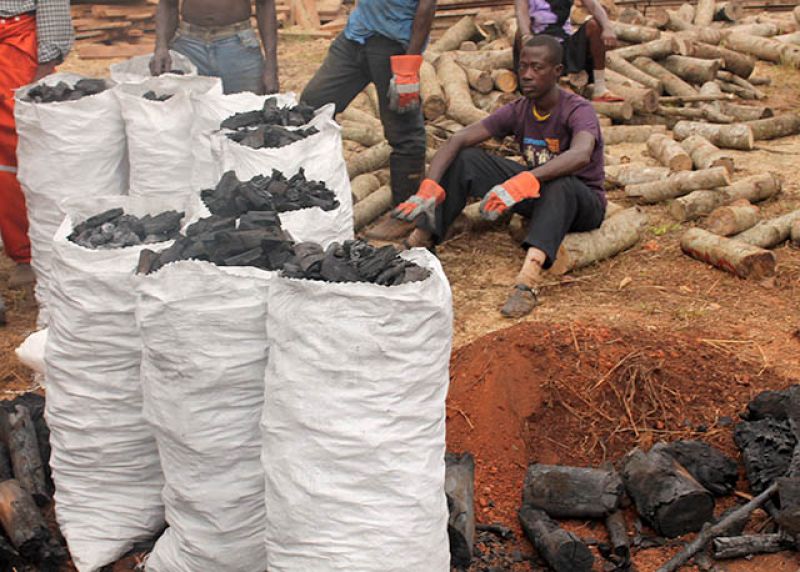
Residents of Yaara, a farming community in the Kintampo North Municipality of the Bono East Region understand the value of climate protection and refused to lift a longstanding ban on charcoal production despite pressure from surrounding communities, where charcoal burning remains a major source of income.
Across Ghana, charcoal production is one of the leading causes of deforestation and across sub-Saharan Africa. Even though it is a source of income for many rural households, environmental experts warn that unsustainable tree felling results in forest degradation, reduced rainfall, soil erosion and exposure to climate vulnerability.
Yaara’s firm stance portrays a rare example of a community-led climate adaptation initiative, with residents choosing environmental protection over short-term economic gains.
Community leaders strongly believe that protecting the forest is critical to preserving water sources, safeguarding biodiversity, preventing bushfires and enhancing resilience to climate change.
The Role of Chiefs
The Chief of Yaara, Nana Yaw Sumaa, told Citi FM in an interview that while neighbouring communities have experienced drying streams, declining rainfall and land degradation linked to tree harvesting for charcoal production, Yaara’s conservation efforts have safeguard a healthier ecosystem and support farming activities.
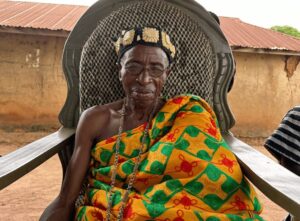
“It is true that other communities have made several attempts to persuade us to abandon our conservation practices and join them in cutting down the remaining trees.”
“They ask why we do not relax our laws and lift the ban to allow charcoal production. However, we have remained firm and resisted that temptation because we realised that if we are not careful, this area could eventually become a desert,” he emphasised.
He stated that the community’s commitment to conservation stems from the visible benefits it has brought and the desire to preserve the environment for future generations.
Yaara’s ban on charcoal production and enforcement of conservation laws started shortly after neighbouring communities began cutting trees for charcoal making.
Although enforcement has not been without challenges, community members say people from neighbouring areas frequently attempt to enter Yaara’s territory to cut trees and burn charcoal.
Enforcement of the laws came with the setting up of a committee that patrols the area every two weeks to monitor illegal tree felling and charcoal production.
Offenders are apprehended, their wood or charcoal confiscated, and made to pay fines at the chief’s palace.
The head of the committee, Kwadwo Nsoah, disclosed that the enforcement efforts were occasionally met with tensions with neighbouring communities.
“There are frequent conflicts because many surrounding communities have already depleted their tree cover. As a result, people often attempt to enter our territory to cut trees, but we resist and ensure they are not allowed to do so,” he said.
Nsoah narrated an incident two years ago when the committee intercepted an individual who had already produced charcoal within the community’s forest.
“We seized the charcoal and brought the culprit before the chief for punishment. One nearby community frequently attempts to intrude into our forest to cut trees, but we remain vigilant,” he added.
He attributed the conservation’s culture to previous generations who stood their ground and must be preserved for future generations.
Farmer Aisha Gbinda said the community’s conservation efforts have helped protect residents from severe bushfires.
“Had it not been for our conservation practices, there would have been major fire outbreaks that could have destroyed many homes. The forest cover around the community helps protect us from bushfires,” she said.
Gbinda added that conservation has also improved agricultural productivity.
“Farming is the main occupation here. Because of our conservation efforts, our land remains more fertile than that of neighbouring communities. We can clearly see the difference in crop yields at the end of each farming season,” she said.
The Assembly Member for Yaara, Emmanuel Sumaa, said the community has intensified tree-planting efforts to complement its conservation measures.
“We continue to record success in food production because of the steps we have taken to protect our forest. While other communities struggle with rainfall shortages, we still receive adequate rainfall. We have also intensified efforts to plant more trees,” he said.
Source: Citinewsroom
