
Close Menu

    Subscribe to Updates

    Get the latest creative news from FooBar about art, design and business.

    What's Hot

    Processed Farm Products Push Ghana’s Non-Traditional Exports Past $5bn Mark

    June 22, 2026

    African Cocoa Alliance Pushes $6,000 Price Floor to End Global Value Imbalance

    June 22, 2026

    Agric Minister Explains What Belarus Partnership Means For Ghana

    June 19, 2026
    Facebook X (Twitter) Instagram
    Facebook X (Twitter) Instagram
    The Ghanaian Farmer
    Subscribe
    • Homepage
    • Agribusiness
    • AgriTech News
    • Livestock
    • Crops
    • Farmer’s Spotlight
    The Ghanaian Farmer
    Home » Galamsey Threatens Livelihoods Of Cashew Farmers In Bono Region
    News

    Galamsey Threatens Livelihoods Of Cashew Farmers In Bono Region

    SefakorBy SefakorMarch 15, 2025No Comments3 Mins Read
    Facebook Twitter Pinterest LinkedIn Tumblr WhatsApp VKontakte Email
    Share
    Facebook Twitter LinkedIn Pinterest Email

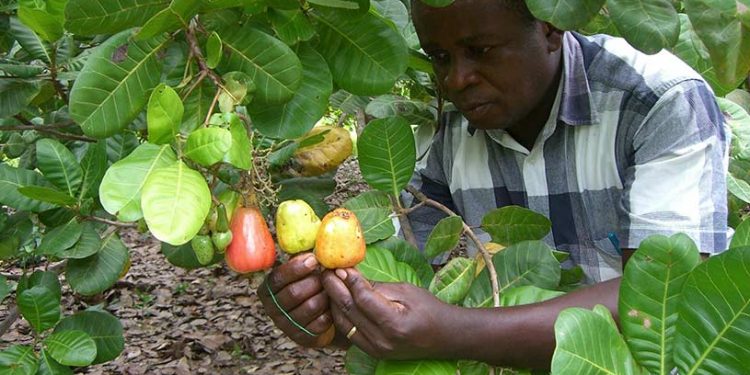
    Cashew production plays a significant role in Ghana’s economy, particularly in rural development and export revenues.

    The cashew sector employs over 200,000 Ghanaians, mostly in rural areas. This contributes significantly to poverty alleviation and improving livelihoods in these regions.

    However, in recent times, the alarming rise of illegal mining, known locally as ‘galamsey’, has begun to devastate cashew farms in Bono Region – posing threats to the sustainability of cashew production and livelihoods of many farmers.

    Illegal miners in the Bono region have encroached some cashew production areas in Wenchi Municipality and Banda District, with their activities causing significant damage to cashew farms, water-bodies and other agricultural lands.

    Communities such as Branam, Amponsakrom and Atuna in the Wenchi municipality, alongside Bandaboase, Surubokrom, Nipanikrom and ‘Operator’ in the Banda district are currently bearing the brunt of these unregulated mining.

    The Bono Region stands out as a major producer in Ghana’s production. However, farmers in the region, like their peers in other cashew-producing areas of the country, currently face significant challenges, include perennial bush-burning, limited access to financing for farm maintenance, skyrocketing costs of inputs and labour and price fluctuations.

    Speaking to the media about the menace, a representative of cashew farmers on the Tree Crops Development Authority (TCDA) board, Mr. Joseph Alexander Bonsu, expressed worry over the extensive destruction of cashew farms in affected communities over the past year.

    He remarked that “all stakeholders must unite to find a lasting solution”.

    Mr. Bonsu again highlighted a troubling trend in which young people of the affected areas increasingly choose illegal mining over cashew farming or working as farmhands.

    “This shift poses a significant threat to sustainable cashew production. I urge government and local chiefs to collaborate in eradicating illegal mining activities to protect both the cashew industry and the environment,” he noted.

    For his part, Raphael Godlove Ahenu, National Coordinator -Cashew Watch Ghana, called for an immediate action. “The impact of galamsey on the cashew sector is getting alarming and demands urgent attention to protect the industry and sustain its contribution to our nation’s economic growth.”

    Mr. Ahenu additionally called on government and stakeholders to take decisive measures against illegal mining.

    “We need strict enforcement of mining regulations and enhanced support for sustainable agricultural practices. Safeguarding the cashew sector is essential not only for economic stability but also environmental sustainability and the well-being of communities that rely on cashew farming,” he said.

    In 2023, cashew exports generated approximately $300 million, making it one of Ghana’s leading non-traditional export commodities.

    Ghana’s 10-year Cashew Development Plan aims to boost cashew export revenues from $243 million in 2019 to $1 billion by 2027, highlighting the sector’s potential for economic transformation. But with the present illegal mining crisis looming in, Ghana may never be able to produce enough cashew for exports, which could significantly affect farmers and the economy at large.

    Reporting by Stephen Freeman, Accra

    Share this:

    • Share on Facebook (Opens in new window) Facebook
    • Share on X (Opens in new window) X

    Like this:

    Like Loading...
    Share. Facebook Twitter Pinterest LinkedIn Tumblr WhatsApp Email
    Previous ArticleGhana Partners Israel To Revolutionise Vegetable Production To Boost Exports
    Next Article We Need GHS700M To make Buffer Stock Operational – CEO
    Sefakor
    • Website

    Related Posts

    Agric Minister Explains What Belarus Partnership Means For Ghana

    June 19, 2026

    Ghana And Côte D’Ivoire Align Cocoa Policies In Bid To Strengthen Global Market Power

    June 17, 2026

    This Is A Good Start” – Peasant Farmers Commend MoFA For 40,000 Fertilizer Bags, Drones Donation

    June 17, 2026

    Peasant Farmers Lament Late Subsidies Despite MoFA’s Plan To Distribute 40,000 Fertiliser Bags

    June 15, 2026

    Leave a ReplyCancel reply

    Demo
    Our Picks

    Remember! Bad Habits That Make a Big Impact on Your Lifestyle

    January 13, 2021

    The Right Morning Routine Can Keep You Energized & Happy

    January 13, 2021

    How to Make Perfume Last Longer Than Before

    January 13, 2021

    Stay off Social Media and Still Keep an Online Social Life

    January 13, 2021
    • Facebook
    • Twitter
    • Instagram
    • YouTube
    • LinkedIn
    Don't Miss
    Agribusiness

    Processed Farm Products Push Ghana’s Non-Traditional Exports Past $5bn Mark

    By SefakorJune 22, 20260

    Value addition to farm products into exportable goods for the international market has made giant…

    Share this:

    • Share on Facebook (Opens in new window) Facebook
    • Share on X (Opens in new window) X

    Like this:

    Like Loading...

    African Cocoa Alliance Pushes $6,000 Price Floor to End Global Value Imbalance

    June 22, 2026

    Agric Minister Explains What Belarus Partnership Means For Ghana

    June 19, 2026

    Ghana And Côte D’Ivoire Align Cocoa Policies In Bid To Strengthen Global Market Power

    June 17, 2026

    Subscribe to Updates

    Get the latest creative news from SmartMag about art & design.

    About Us
    About Us

    The Ghanaian Farmer is Ghana’s leading agricultural news and advocacy platform, dedicated to informing, educating, and inspiring farmers and agribusiness stakeholders. We spotlight innovations, share success stories, and promote sustainable practices to strengthen Ghana and Africa’s food systems

    We're open to do busines with you and amplify your agriculture business.

    Email Us: info@theghanaianfarmer.com
    Contact: +233 554830431

    Our Picks

    Remember! Bad Habits That Make a Big Impact on Your Lifestyle

    January 13, 2021

    The Right Morning Routine Can Keep You Energized & Happy

    January 13, 2021

    How to Make Perfume Last Longer Than Before

    January 13, 2021
    New Comments
    • John on Climate Change And The Need For Forest Protection In Ghana
    • Sefakor on Cashew Development In Ghana; What Has Changed? Nana Yaw Reuben writes
    • https://yourkinkinpink.com on Commercialisation Of Farming Drives Market And Investment- Rice Farmer
    • tokyovipjapanesecompanions.com on Commercialisation Of Farming Drives Market And Investment- Rice Farmer
    Facebook X (Twitter) Instagram YouTube LinkedIn
    © 2026 The Ghanaian Farmer. Designed by AJ Willz Media.

    Type above and press Enter to search. Press Esc to cancel.

    %d