

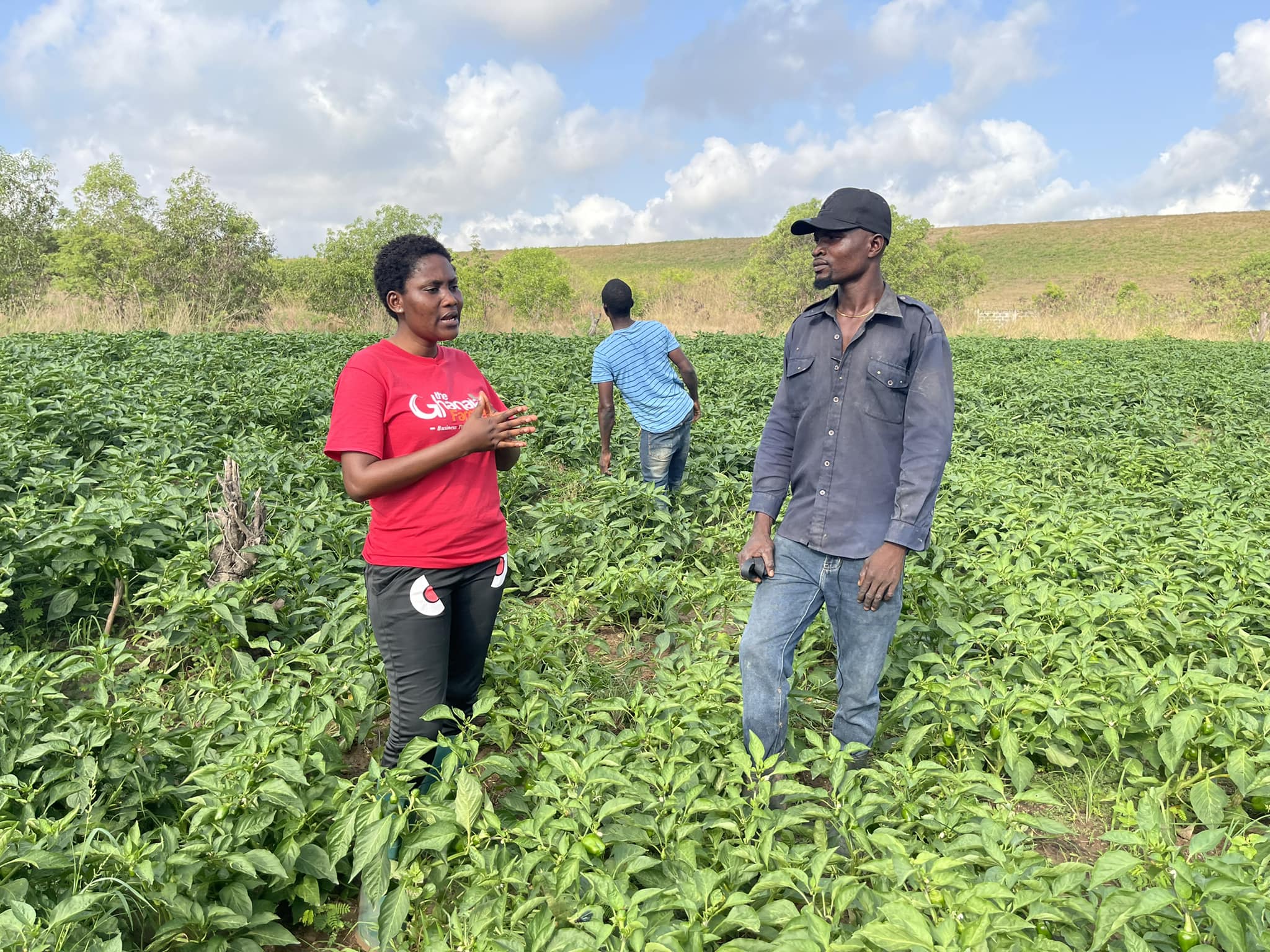
Every year, smallholder farmers in Africa suffer yield losses due to changes in timing and length of growing period – a phenomenon induced by changes in rainfall and water availability for irrigation.
When farmers record low yields, it is not only their livelihoods that are affected, but the food security, nutritional balance, and an entire value chain of a nation could be plagued and disrupted.
Africa’s arable land
With Africa possessing more 60 per cent of the world’s arable lands and agriculture employing about 65 per cent of African workers, the sector is key to the continent’s transformation, economic independence, and general wellbeing of its people.
But there is danger ahead. The continent’s food systems are being degraded while its population soars. Africa’s population is projected to hit 2 billion by 2050 which means food production must be scaled up to meet consumption requirements.
FAO statistics
According to Food and Agriculture Organisation (FAO), smallholder farmers contribute up to 80 per cent of sub-Saharan Africa’s food supply and Africa has an estimated 33 million smallholder farms – but hunger already affects about 240 million Africans daily.
The Economic Commission for Africa (ECA) has estimated that African countries could lose between 2 per cent and 16 per cent of gross domestic product due to stunted growth among children because of malnutrition.
Reduction in Africa’s food production if….
The World Bank has estimated that Africa’s wheat production could decrease by 17 per cent, maize production by 5 per cent, sorghum production by 15 per cent and millet production by 10 per cent by 2050 if the current climate trend continued.
These are the burning issues that should dominate the climate discussion from Africa’s perspective given that a further disruption of the continent’s food systems has dire consequences on food security, livelihoods, and the economy.
Role of the media
The media, regarded as an agent of change, is required to be the mouthpiece of the continent, and advocate the adoption of climate-smart practices, that could mitigate the impact of climate change on the agricultural sector.
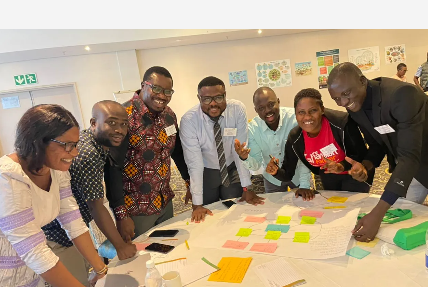
These were among the issues that emerged at a recent Accelerating Impacts of CGIAR Climate Research for Africa (AICCRA) Spring School on Climate Change held from March 29-30, 2023, at Cape Town, South Africa.
During the two-day workshop, media professionals, communicators and advocates for climate change or agriculture unpacked measures to transform African agriculture and food systems for a more sustainable and climate-resilient future.
It was identified that journalists often focused on reporting climate-driven disasters, with limited attention to agricultural issues and how those disasters impacted the livelihoods of smallholder farmers.
In many instances, the voices of smallholder farmers, whose resilience and creativity should be highlighted, are buried in the story while policy makers, influencers, and other individuals who may not be directly impacted by the issue at hand, assume the focal point of the story.
In an interview with the Ghana News Agency after the workshop, Sabrina Trautman, a development consultant, and systems scientist, urged journalists to be proactive in telling climate-related stories instead of being reactive.
Describing journalists as the “change makers in Africa” she said media practitioners are the link between policy, science, and farmers on the ground.
Ms Trautman, who was a facilitator at the AICCRA Workshop, said journalists must identify and investigate risks in their communities and push for policy action to forestall disaster.
“At the moment, a lot of the climate journalism is reactive to climate impact and there is a lot more we can be writing about to be proactive and drive solutions and innovations.
“We know we are in climate crisis; we know the impacts are huge in Africa and we know there is innovation happening everywhere. The media has a powerful role to share and amplify the message,” she said.
One of the key highlights of the last year’s climate talks (COP 27) in Egypt was the launch of the Food and Agriculture for Sustainable Transformation (FAST) initiative to improve the quantity and quality of climate finance contributions to transform agriculture and food systems by 2030.
Recommendations
Agriculture is the lifeline of the African economy as well as the survival of its people and thus the continent should be a key beneficiary of the FAST initiative.
It is necessary for smallholder farmers in Africa to build their resilience against extreme weather events to adapt to changing climate. This can only be possible if the challenges of these vulnerable farmers are amplified to ensure that right investments are made to avert food crisis.
Source: GNA
