

In a groundbreaking move set to transform the agricultural landscape in Ghana, the Ministry of Food and Agriculture (MOFA) has developed a new financing model for the second phase of the Planting for Food and Jobs Programme (PFJ) that aims to empower farmers, enhance crop yields, and bolster the nation’s food security.
According to the Assistant Director of the MoFA, Charles Adama Ayueboro, this innovative approach dubbed PFJ 2.0 includes extending credit to farmers, enabling them to access essential inputs required for cultivation and repayment will be made through the harvest itself.
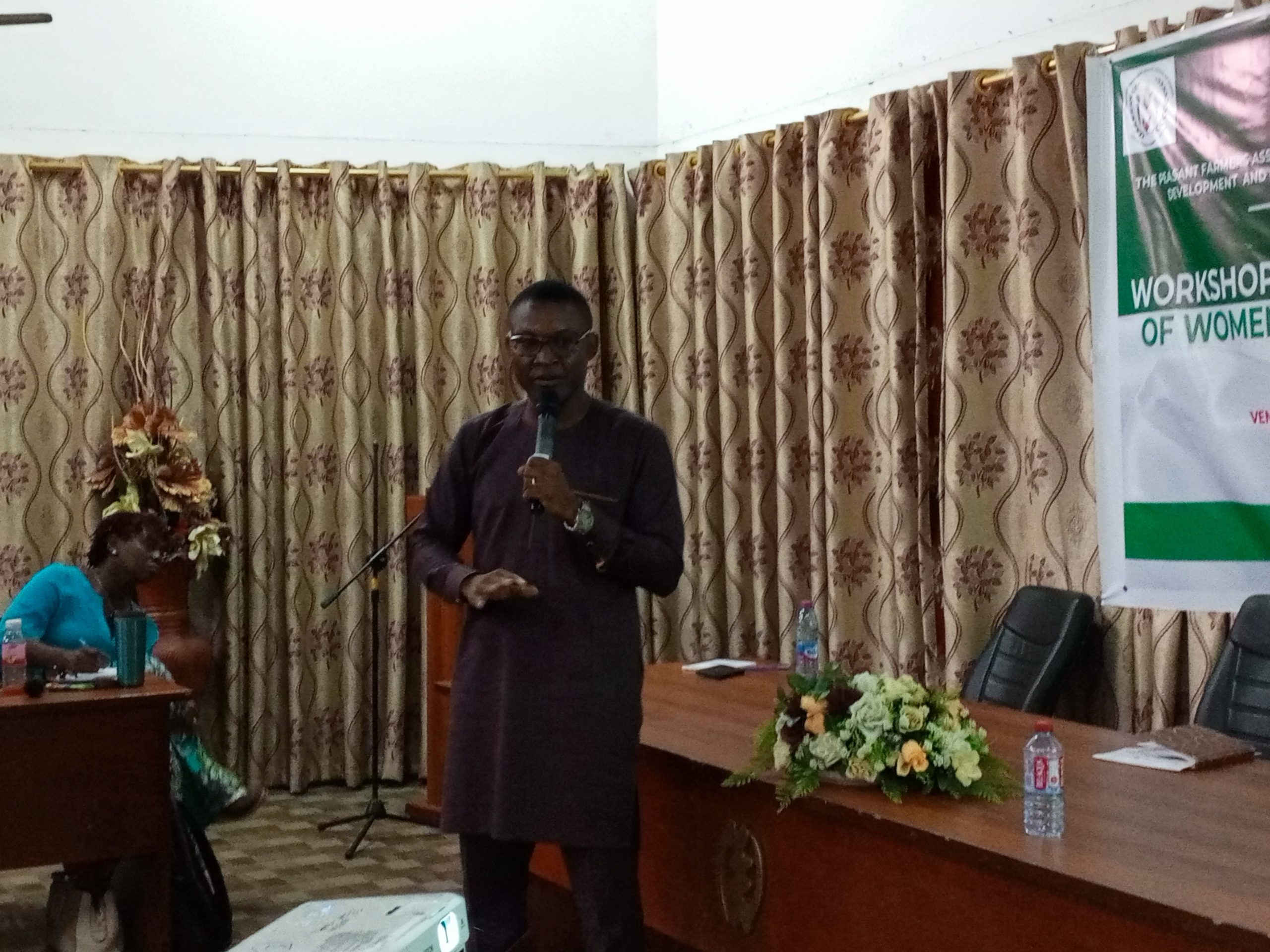
Mr. Ayueboro made this known during a workshop on the inclusive participation of women in the new Planting for Foods and Jobs Programme dubbed ‘PFJ 2.0’ in Accra. The programme was meant to take the input of women before the launch of the second phase of the PFJ.

To qualify for this forward-looking initiative, Mr Adama Ayueboro revealed that farmers are required to register with approved aggregators. These aggregators will act as intermediaries, facilitating the distribution of inputs to farmers and collecting the resulting harvest as repayment. The state on the other hand will play a pivotal role, acting as a guarantor for farmers and thus allowing financial institutions to provide much-needed credit facilities.
The scope of the PFJ 2.0 encompasses a diverse range of crops, including staple grains such as rice, maize, soya beans, and sorghum. The plan also extends to vegetables like tomatoes, onions, and peppers, along with staples like cassava, yam, and plantains. Additionally, livestock will form a vital component of this holistic approach to farming aimed at reducing food importation and increasing exportation.

“Central to the success of this model are the aggregators, who will not only handle input distribution but also establish links to mechanization services. Moreover, this model will actively engage off-takers, creating a streamlined supply chain from farm to consumer,” the Assistant Director of MoFA, Charles Ayueboro reiterated.
Empowering women is a crucial aspect of PFJ 2.0, with a target of achieving 40% women’s participation. To further ensure the success of this endeavour, the government will provide guarantee letters to aggregators to facilitate access to credit.
According to Charles Adama Ayueboro, the government’s commitment to this initiative is not financial. While it won’t provide direct funding, the government will bear the costs incurred if there are any defaults, indicating a shared risk approach. The inaugural phase will focus on select crops, with plans to expand in subsequent years.
The official launch of this transformative model is slated for the end of August 2023 or the beginning of September.
For his part, the Executive Secretary of the Peasant Farmers Association, Dr Charles Nyaaba indicated the PFJ 2.0 is commendable but needs to include a clear-cut policy on the government’s commitment to ensure the success of the project.
In order to increase productivity and sustainability, Dr Nyaba suggested that this model must heavily employ irrigation techniques across the country.
“The current model didn’t state clearly the role of government in the whole arrangement; it appears all the risk is on the aggregator we expect the government to also make some kind of investment that will ensure that the cost of production comes down, otherwise, if the government is doing anything, especially about subsidizing interest rates and the government is supporting the aggregators to do the monitoring and do the recovery, at the end of the day, the produce will still get to the market at a higher cost,” He emphasised.
Dr Charles Nyaaba again stressed that the only way Ghana can produce enough food at affordable rates for both local and international markets is when the taxes on inputs are removed. “The taxes on farm machinery, equipment and agro-inputs need to be seriously looked at. In the absence of subsidies, taxes on these inputs should be removed.”
“The PFJ 2.0 is generally good but there are certain areas that we think the drafters have to take a second look at. We think we have to have two different models; one for grains and sorghums of which the produce can be aggregated and put in a warehouse and then another one for perishable commodities where aggregators will be linked to support farmers with inputs and that after-production, they should be allowed to sell it to the open market because of the perishability of those commodities,” he said.
Dr Nyaaba also called on the Ministry to review the draft to ensure all-inclusive aggregators. “We want the Ministry also to take a second look at the type of the aggregators that we’re looking at so that we don’t end up leaving out the real aggregators and women who all these years have been dealing with farmers supporting them in small ways because the current arrangement will make it very difficult for the ordinary woman-aggregator to participate, so we want that component to be looked at again and made more simple for the women to fully participate in the aggregation of the commodities.
